Showing posts with label public transit. Show all posts

Friday, February 10, 2017

Seattle Adds Thousands of New Jobs but Few Car Commuters

Nice job Seattle! According to Streetsblog, a new report compiled by the nonprofit Commute Seattle says that the share of commuters who drive alone to downtown Seattle dropped from 35 percent in 2010 to 30 percent last year.

What's even more impressive about that though is that Downtown Seattle has added 45,000 jobs in that time, but only 2,255 new drive-alone trips have been added, according to a new Commute Seattle survey. The other 95 percent of commute trips were taken by transit, walking, biking, telecommuting and shared car trips.

The survey shows that public transit is providing very close to 50 percent of downtown commute trips and absorbed about 31,000 of those 45,000 new commute trips.

Many people are giving credit for this to transit agencies for improving and adding service, companies for buying transit passes for employees, and the city for installing bike amenities and implementing transit-friendly policies.

Thursday, December 22, 2016

How Buses Will Work If Lanes Are Reduced on Monroe Street

There has been a lot of talk lately about a proposal to reduce about a mile-long section of Monroe Street from five lanes to three. Businesses are worried about the impact a long-term construction project will have on their bottom line, people who drive through the area are concerned about delays and a lot of people have voiced complaints about getting stuck behind buses stopping at multiple bus stops through the area if there is just one lane in each direction.

According to The Inlander, Monroe is STA's third busiest route, with nearly 650 bus trips taken on the route every week. So the newspaper asked STA how things will work with buses stopping to pickup and drop off passengers on a narrowed roadways.

To start, the Inlander reports, STA plans to reduce the number of bus stops in that stretch- but only by one stop, so there will be a total of three stops.

STA officials are hoping that off-board ticketing that lets bus riders pay ahead of time will speed up the boarding process and "level boarding" will put wheelchairs at the same level as the buses, which will reduce the time required to load them onto buses.

Even if STA didn't reduce stops or implement the other technology that could speed things up, officials say the lane reductions would only add about 25 seconds to your commute during the "rush hour" period.

Thursday, December 8, 2016

TV is Finally Getting on Board with Public Transit

Was this group too good to ride the subway?
What's your favorite television show from the past? What about ones set in New York City? Have you ever noticed that the use of public transit is rarely depicted in these shows? Even ones set in New York like Seinfeld and Sex and the City.

Things are changing though, according to this NPR article. More shows are starting to depict characters routinely using public transit, like Girls, the Mindy Project, Broad City and Mr. Robot. Even shows not set in New York are starting to use buses and trains more often in plot lines. Jane the Virgin goes into labor on the bus. The characters on Atlanta have some deep conversations on buses.

And transit advocates are hoping the trend will continue, saying that positive depictions of people using ways to get around other than driving will get more people to do so in real life.

Thursday, October 6, 2016

Seattle Metro Asking To Rent Parking Spaces For Commuters

A new pilot program in Seattle could make it easier for some commuters to jump on the bus or light Next City says that a partnership between King County Metro Transit and Diamond Parking will allow people and businesses to rent out parking spaces near frequent transit services and park-and-rides.

rail rather than driving their own cars.

Participating building owners and property managers need to offer at least 20 spaces attached to multi-family or mixed-use residential developments to be eligible for the program. Parking spaces must also have safe pedestrian connections within a quarter-mile of a frequent transit service. King County Metro will market the program, and Diamond Parking will manage the logistics.


A survey by Metro found that daily park-and-ride users said they would be willing to pay about $44 to $110 per month for a guaranteed parking space near their transit stop.


Seattle has the fifth-worst traffic in the country, and during evening commute hours nearly three-fourths of roads are congested. Yet half of Seattle residents still drive to work. Metro is hoping making more parking available near transit will change that by motivating more people to use public transit.


The parking pilot program will begin early next year.

Wednesday, October 5, 2016

How Revolutionary Personal Transit Idea Take Off?

West Viriginia's Personal Rapid Transit cars.
Talk about ideas that didn't take off. NPR this week has an article on Morgantown, West Virginia's Personal Rapid Transit (PRT) system, installed in 1975, that just never caught on and didn't bring with it a new age of public transit, as billed.

Even so, West Virginia University, which runs the PRT system, isn't giving up on it and is spending more than $100 million to refurbish the aging system. With PRT, riders start from a central station downtown and pay 50 cents each (free if you are a student) to get in a small car that only goes to your destination and doesn't stop anywhere else.

Each car holds about 18 people and a sign over the cars indicates where they are headed. PRT's advantage is that, unlike traditional transit, the car doesn't stop at multiple stops as it heads to it's final destination. Another advantage is that if there's a midday lull, and the cars aren't needed, they just sit at a station and wait, rather than running empty.

The system provides 15,000 rides on a typical day (Morgantown has a population of 30,000) — and doubles that ridership when there's a home football game.

Sounds great right? So why hasn't PRT caught on? For several reasons; opposition from companies that make systems for buses and light rail, questions about the reliability of the new technology, and uncertainty about PRT's cost-effectiveness. 

Thursday, August 4, 2016

Roundtable Discussion With Social Service Providers

We are hosting a series of "roundtable" discussions with members of the community, in advance of updating our long-range transportation plan, Horizon  2040. Yesterday we met with representatives of local social service agencies; people who work with folks who are disabled, senior citizens, developmentally disabled, and suffering from mental illness.

We basically asked four questions and opened the floor to a discussion. The questions were:

  1. What are your thoughts on trends in transportation?
  2. What do you think is working well with transportation in our region?
  3. What concerns you about transportation in our region?
  4. If you could offer the SRTC Board advice before starting an update to Horizon 2040, what would it be?
Here is some of what we heard:

  •  There are only two slots for wheelchairs on buses. If those are full, you have to wait for the next bus. With STA’s new computer system, you should be able to see in real time if those slots are taken before the bus gets to your stop.
  • There's a definite need for an Uber or Lyft drive with a wheelchair-accessible van.
  •  Disabilities are NOT seasonal. Because of barriers like snow, some people can use paratransit some months but not others.  
  • It has to be 85 degrees or hotter for “weather” riders to be allowed to ride the bus.
  • There is a limited number of bags allowed on paratransit, which makes it hard for people to do their shopping for the week but they don’t have another way to do it. This forces people to shop at places in their immediate neighborhood, such as mini marts, which can cost more and not offer healthy choices. Don’t try to buy a watermelon because how are you going to get that home?
  •  Overlay health care facilities on transportation maps when planning. 
  •  A $45 bus pass consumes a huge part of many clients’ monthly budgets. They are encouraged to get into the community but transportation poses a big barrier.
  •  Spokane City and other jurisidictions have a mandate to avoid concentrations of affordable housing. Unfortunately, the best place to build affordable housing  is on existing transit routes but that exacerbates the concentration issues. 
  • A mobile farmers market is in the works.

Wednesday, August 3, 2016

China Test-Runs It's Long-Awaited "Straddling Bus"

After years of waiting, China's infamous "straddling bus" went on its inaugural test run yesterday.

The bus, officially named the Transit Elevated Bus (TEB),  will operate above the streets, while traffic passes by underneath. It will be able to carry up to 1,200 passengers (check out the picture of the interior- lots of room) and travel almost 40 miles per hour.


.
The test-run was apparently less than spectacular as it didn't exactly simulate real world traffic conditions with just one bus carriage on a controlled track of only 300 meters in length. But even so, a lot of people were excited to see even that, as the TEB has been talked about for a long time but not much has happened with it.

Wednesday, July 13, 2016

Transit Users Want System Improvements, Not Perks

WiFi- Not as important to transit
users as originally though.
Perks are nice but it turns out that what people really want on public transit is better service. According to Wired, a new report from research group TransitCenter says bonuses like power outlets, wifi and better shelters aren't really all that important to transit users. More than 3,000 respondents to a survey from 17 regions across the country ranked outlets and wifi dead last in what they would like to see on their commutes. What they did request though was more reliable service and spending funding for things like more plush seats and wifi on system improvements instead. Very interesting; there is more info here.


Monday, July 11, 2016

Liberty, The Lyft for Rural America

One of the most common needs I hear from people when out in the public is that they need
transportation to services such as medical appointments and shopping from rural areas. Because outlying areas often have less expensive housing, many people choose to live outside the urban area. This is fine except that many start to experience mobility issues as they get older. The distance to the nearest city or a lack of public transit in rural areas can make getting around a challenge.

According to Silicon Prairie News, a new service could be the Uber or Lyft for rural dwellers. Liberty offers an Uber-like app people can use to get rides to the nearest urban area.

Besides getting people where they need to go, Liberty creators say the service will add jobs (drivers for the service) in rural communities where they are often needed.

So far, Liberty is only available in Texas and Nebraska and there is no word when, or if, it will be expanding.

Monday, March 28, 2016

Renovations Start in April on the STA Plaza

Remodeling of the Spokane Transit Authority Plaza is finally ready to get underway. In the plans since 2008, the Plaza's $3.5 million face lift has been delayed for multiple reasons.


According to the Spokesman-Review, the yearlong construction project starts in April and will consolidate transit services on the first floor and renovate the second floor for other uses.

Here is what the remodel includes:

  • Customer service will be moved from the second to the first floor and combined with security.
  • The Sprague Avenue side of the building will be opened up with indoor waiting areas and windows.
  • Retail space on the second floor will be eliminated and new retail space will be built on the west wall of the first floor to go along with an existing Subway sandwich shop.
  • The first-floor rotunda will be made available as commercial space.
  • The existing escalator will be removed and a new escalator  built along the south wall.
  • The two cougar sculptures will be moved to the exterior of a new elevator on the south side.
  • An interior construction wall will be erected so bus operations can continue during the work.
Major work will be performed at night so as to not disrupt Plaza operations. The Plaza will close to riders at 8 p.m. Bus loading zones will not be changed.

Thursday, February 18, 2016

Central City Line Workshop

Spokane Transit is hosting its third All-Community Central City Line Workshop from 6:30 to 8:30 p.m. on Tuesday, Mar. 1 to update citizens on the project, and gather input on the project’s implications for the West Downtown and Browne’s Addition neighborhoods.

Specific components of the workshop include:
 -  Downtown and neighborhood alignment (which     roads the CCL will travel on)- Stop locations
 - Station design and features
- Potential City of Spokane land use policies and economic development incentives

The workshop is at the Southwest Community Center, 310 S. Spruce Street, from 6:30-8:30 p.m.

Wednesday, February 3, 2016

Driverless Bus On the Road in the Netherlands

Forget driverless cars- the Netherlands (as usual) is way ahead of us. Last week, an electric,
driverless bus called a WEpod was launched there on a trial basis on the campus of Wageningen University, according to the Christian Science Monitor.

The bus doesn't even have a steering wheel or pedals that would allow a human driver to take control, unlike driverless cars in the U.S. The WEpods, which only travel at a top speed of 25 miles per hour,  only carry six people but will be used as regular public transit eventually. In April, driverlesss semi-trucks are supposed to be rolled out in the Netherlands as well. 

Monday, January 25, 2016

All-Community Central City Line Workshop Scheduled

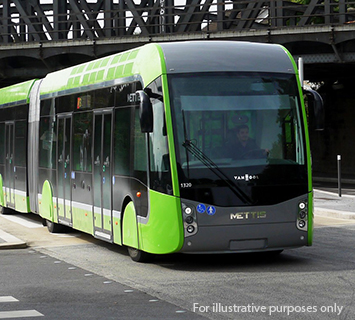
CCL Vehicle Type
Mark your calendars- Spokane Transit is hosting an All-Community Central City Line Workshop to update citizens on the project and gather input on a variety its elements including:
  •  Alignment (which roads through Downtown it will travel on)
  • Stop locations
  • Station design and amenities
  • Potential land use policies and economic development incentives to complement the project’s transit function

The workshop is Tuesday, February 2 in the lobby of the Pharmaceutical & Biomedical Science (PBS) Building at WSU Spokane from 4-6 p.m.

Monday, January 11, 2016

Public Meeting To Kick Off West Hills Planning Study

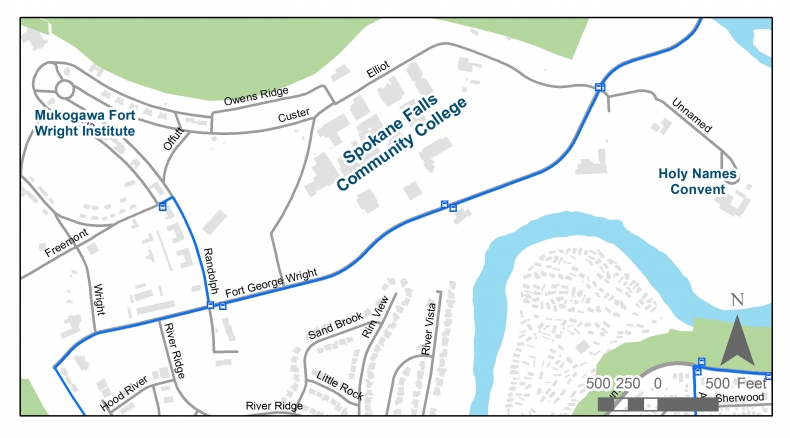
West Hills Map
Spokane Transit is conducting a planning study for a transit station at Spokane Falls Community College in response to requests from community members. The City of Spokane also anticipates constructing street improvements on Fort George Wright Drive in the near term future. As a result, the STA will team up with the City for a collaborative planning effort with the following proposed scope:
  • Inventory existing conditions and develop a vision and goals for the corridor
  • Identify alternatives for a mixed use/neighborhood serving commercial center
  • Assess alternatives for a transit station at Spokane Falls Community College
  • Develop concepts for transit access improvements for the Mukogawa Fort Wright Institute
  • Identify and map concepts to improve multi-modal (bike, pedestrian & transit) connections on and to the corridor
  • Develop a concept for streetscape improvements for Fort George Wright Drive
A community meeting will be held to kick off the effort on Tuesday, January 12, from 6:30-8:00 p.m. at Spokane Falls Community College, 3410 W. Fort George Wrigth Drive in Falls Gateway Building 30, Falls Conference Room 30-212.

The Neighborhood’s goals and desires for the corridor will be discussed at that meeting. More info on the study can be found on the Spokane Transit website here.


Monday, January 4, 2016

10 Traffic Myths Debunked

One of our GIS analysts opened an umbrella in my office the other day. I jokingly reminded him that he just brought bad luck on himself. He told me that's an old wive's tale and that he was going to bring a ladder into my office to walk under. It turns out that there are many, many old wive's tales, also known as myths, in the transportation world. Citylab put together a post on 10 Tired Traffic Myths that you can read here. 

It includes:
  • More roads mean less traffic
  • More transit means less traffic
  • Bike lanes make traffic worse
  • A wider road is a safer road
  • The next lane over is moving faster
  • There's no downside to cheap gas
  • Drivers pay the full cost of road maintenance
  • And more!
Read the article to find out why these are myths. 


STA Board Considering Asking Voters For Tax Increase Again

Spokane Transit Authority officials are considering putting another measure on the ballot this year. 

According to the Spokesman-Review, support has emerged to rerun the ballot measure in 2016 that failed last year  that would have raised the sales tax 0.3 percent for systemwide upgrades. That's according to Spokane County Commissioner Al French, also an STA Board member.

A trolley was the centerpiece of the proposed service improvements that would have also extended night and weekend bus service and added new park-and-ride facilities.

The April ballot measure lost narrowly. It would have raised $270 million over 10 years and brought in $60 million in state and federal grants.

In the meantime, STA staff has been trying to obtain a $50 million federal “small starts” transit grant for the Central City Line (CCL) and state lawmakers included $15 million for the CCL in a state transportation funding package to provide the match money required for the federal grant.

In December, the STA board voted to continue supporting the "Moving Forward" plan that was the basis for the unsuccessful ballot measure.

Tuesday, December 29, 2015

Two Days Left To Take Web Survey

You only have a couple days left to take our web survey. There are many areas to consider when deciding which transportation projects to fund. Safety, reducing congestion, adding bicycle and pedestrian facilities, preserving and maintaining current roadways, and improving public transit are just a couple of the focus areas we have to look at.

So which is most important to you? That's what we're asking people to let us know with our web survey- which areas are a priority for you that we invest local transportation dollars in. Unfortunately, there's not enough money to go around so we have to be selective.

Let us know your preferences and thoughts so we can develop our transportation system into an efficient one for our community.

Additional Options Needed Across the Cascades

Like last week, it happens every so often and we all freak out. The Washington State Department of Transportation closed both Snoqualmie Pass and Stevens Passes on Christmas Eve due to ten feet of snow and serious avalanche danger. While this is a safety measure, people still complain. Several friends scrapped their plans to spend the holiday with family on the west side after looking into flights (too full and too expensive).

As the folks at the Seattle Transit Blog pointed out in a post yesterday, we need more and better options across the Cascades. A major storm can literally leave us, and the products we depend on that are shipped over the pass daily, stranded and separated from the rest of the state.

And, as the blog post points out, it's not just during the rare freak snowstorm that we need these options. I drive to the west side often and frankly, I hate the drive. If there was train service for a decent price, at a decent hour and that was timely, I think it would be well-used.

At the link above, Seattle Transit Blog breaks down the number of people traveling the passes everyday and how this amount of people could be transported more efficiently.

Friday, December 18, 2015

Assaults on Houston Bus Drivers up 73% Percent in 2015

It's seems like it would be hard enough to drive a bus- piloting a large vehicle, talking to people about where they need to get off, watching for cars cutting in front of you, etc.- without having to worry about getting beat up. Yes, beat up. Apparently there has been a spike in assaults on bus drivers in Houston, TX.

According to the Houston Chronicle, Houston Metro officials yesterday announced a public awareness campaign to make riders aware of the Transit Authority’s code of conduct for riders. This follows a 73 percent increase in assaults on operators in 2015 compared to 2014. So far this year, Metro has reported 52 assaults, ranging from angry riders spitting on bus drivers to punching, head-butting and cursing them. One man, in the video below, even violently confronts a bus driver while carrying a baby in a front pack on his chest.

Officials can't identify a single factor that is prompting the increased assaults. Some have been related to paying fares while others involved loud music or cell phone use. There is also a mental health issue in the Houston community according to officials that could be contributing to the violence.

As a preventative measure, drivers are receiving training on how to avoid escalating tense situations.


Tuesday, December 15, 2015

Local Blog Suggests Night Bus Service

The Spokane Rising blog is suggesting a "night bus" service in Spokane. The idea is to model the system after similar ones in Europe where shuttles could be used on simple routes, all which start at the STA Plaza, on Friday and Saturday nights. Stops would be limited and park and rides and transit centers used as the terminuses for each route. The suggestion is to just have a handful of routes, such as two north routes, a south hill route, a Valley route and a couple others.

My concern with this suggestion was funding. Spokane Rising suggests charging a flat $5 rate for everyone, even if they already have a monthly pass. While this would help with some of STA's expenses, it still wouldn't cover all of them.

The blog suggests this new service would reduce traffic deaths and DUIs and increase economic activity in our downtown area by encouraging people to come downtown. What do you think?

About SRTC

SRTC is the federally designated Metropolitan Planning Organization (MPO) for Spokane County. Urbanized areas with populations exceeding 50,000 people are required to have an MPO. SRTC was formed to address the county's transportation planning needs. It provides coordination in planning between the public, cities, small towns, the county, the state, transit providers, and tribes.

SRTC offers services including transportation monitoring, transportation modeling, census information analysis, travel demand forecasting, historical traffic count analysis, geographic information systems, and trip generation rates.